

Call for Papers
Research papers are invited for presentation in the technical sessions of the Research Committees of the Indian Sociological Society. Papers are to be prepared in consonance with the main theme of the conference.
51st All India Sociological Conference · Indian Sociological Society
Exploring the Future of Indian Sociology
The 51st Conference
We are living through a period of rapid and significant social transformation. Across the globe, the rise of new forms of populist politics and mobilisation, the growing demand for specialised professional skills, and the rise of digital platform economies have collectively reconfigured the fabric of everyday social reality.
The 51st All India Sociological Conference asks how local cultural expressions, regional specificities and classroom teaching practices can shape the future of Indian sociology in an interconnected yet fragmented world. It is an invitation to sociologists, researchers, teachers and students across India to think together about what our discipline should become.
The world is not a uniform whole; it is a “pluriverse” made up of many interconnected worlds, each requiring empirically grounded sociological analysis. On the pluriversality of social problems
In On Decoloniality (2018), Walter D. Mignolo and Catherine E. Walsh observe that we are witnessing a “pluriversality of social problems” — complex socio-human challenges can no longer be conceptualised through a single, universal model. Localised crises, whether a regional ecological change, local caste resentments or neighbourhood-level housing struggles, are conditioned by their own specific historical and social contexts while remaining deeply tied to worldwide economic and political shifts.
Seven decades of Indian sociology
The intellectual trajectory of the All India Sociological Conference reflects the changing social realities and scholarly concerns of post-independence India. The First All India Sociological Conference, held in Dehradun in 1955 on the theme “Social Change”, marked an early effort to examine the structural and institutional dimensions of Indian society.
The First AISC, on the theme “Social Change” — an early effort to examine the structural and institutional dimensions of Indian society.
Growing scholarly engagement with the experiences of marginalised communities and changing patterns of collective action.
Social movements, agrarian relations, inequality, resistance and emerging forms of identity-based mobilisation.
Continued expansion of the discipline's engagement with collective action and marginality.
Globalisation, civil society, technological change and new forms of social exclusion enter the frame.
Sociological inquiry expands further in response to emerging social transformations.
The 50th AISC — “Mobilities and Inequalities: Shifting Contexts; Changing Paradigms”.
The 51st AISC — “Culture Region and Pedagogy: Exploring the Future of Indian Sociology”, hosted by KIIT University.
Scroll the timeline horizontally to follow the conference through the decades.
Decolonising theory & reclaiming indigenous realities
At the heart of this gathering lies an urgent need to engage with what has been described as an epistemic crisis: a challenge to established ways of defining truth, validating evidence, and determining whose knowledge is recognised as legitimate.
For much of its institutional history, sociology in universities across the world has been strongly influenced by the works of Western theorists such as Marx, Weber and Durkheim, assuming that their findings about European industrial societies applied universally.
Scholars such as Raewyn Connell, particularly through her formulation of Southern Theory, and Syed Farid Alatas have critically examined this epistemic imbalance and advocated the decolonisation of sociological knowledge. Their work calls for greater recognition of “Theory from the South”.
Plan ahead
The academic calendar for the 51st AISC, as published by the Organising Committee. Paper presenters must complete registration before 30 November 2026.
Two deadlines to watch
Abstracts close on 31 October 2026. Registration for paper presenters closes on 30 November 2026 — presenters are not eligible for spot registration.
The lowest registration rates across all categories. See the fee table.
On or before. Abstracts received beyond this date cannot be published in the ‘Book of Abstracts’.
Standard rates apply after the early bird window closes.
Final window before the conference; higher rates apply.
Paper presenters must have registered by this date. In case of cancellation before this date, only 75% of the registration amount will be refunded.
For delegates registered under “Registration with accommodation”, until 29 December 2026.
Department of Sociology, School of Liberal Studies, KIIT Deemed to be University, Bhubaneswar, Odisha.
Available at the highest rates. Not open to paper presenters.
Take part
Research papers are invited for presentation in the technical sessions of the Research Committees of the Indian Sociological Society. Papers are to be prepared in consonance with the main theme of the conference.
Abstracts are selected on the relation of the topic to the theme of the conference, its sociological relevance, and conceptual clarity and methodological application. Between 200–250 words, submitted through your ISS account by 31 October 2026.
Registration is open to ISS members across delegate, research scholar/student, accompanying person and foreign participant categories. Early Bird rates apply till 10 October 2026, from ₹3500.
The people
The Chief Guest, keynote speakers, plenary chairs and memorial lecture speakers for the 51st AISC have not yet been officially announced. This page will be updated as soon as the Organising Committee confirms them.
The Chief Patron, Patrons, the Conference Organising Committee 2026 (National) and its members, the Organising Secretaries, and all 33 Research Committees with their two Ad-Hoc Research Committees — including convenor, co-convenor and contact addresses.
Sociology and contemporary challenges
The emphasis on grounding sociological inquiry in local social realities creates an urgent mandate to connect theoretical inquiry with empirical research and public concerns. Sociologists are now asked to deliver actionable solutions for three immediate social crises.
Understanding how environmental degradation disproportionately impacts resource-dependent rural and tribal populations.
Addressing the chronic economic and emotional insecurity experienced by workers trapped in unstable, low-paying gig work, and examining the everyday survival strategies of city dwellers in unauthorised colonies or informal settlements where basic infrastructure is scarce.
Analysing how automated technologies, data tracking and algorithmic decision-making influence welfare distribution and civil liberties.
The host department
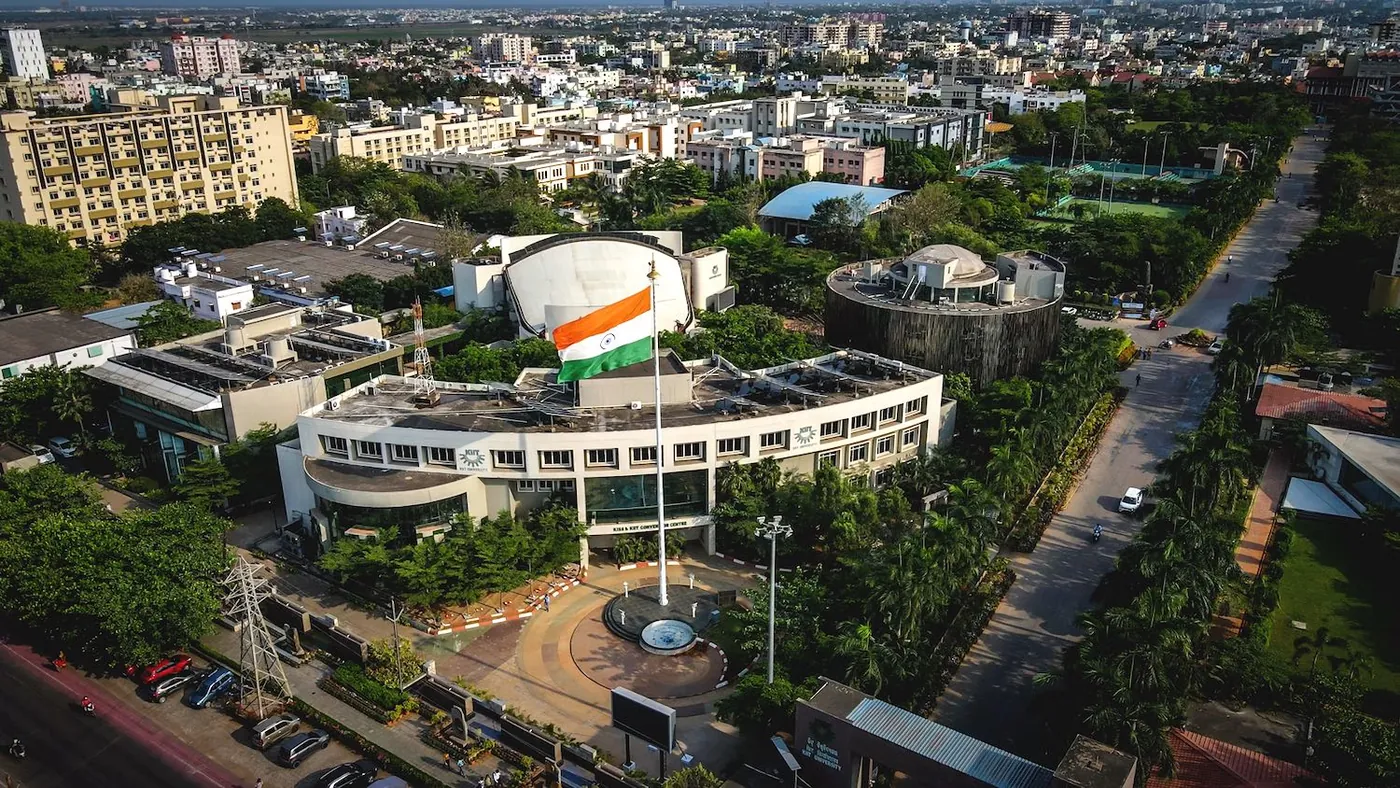
“Understanding Society, Shaping the Future” — the 51st All India Sociological Conference is hosted by the Department of Sociology, School of Liberal Studies, Kalinga Institute of Industrial Technology, Deemed-to-be-University (KIIT Deemed to be University), Bhubaneswar, Odisha.
The Department of Sociology at School of Liberal Studies, KIIT University that started in 2021 has left a deep academic imprint on the landscape of Odisha. The department provides students with a dynamic and engaging learning environment combining classroom learning with experiential and field-based education, with compulsory annual field visits, internship opportunities with NGOs, research organisations and UN volunteer programmes, along with one-to-one academic mentorship and career counselling. Established in line with modern educational paradigms and the New Education Policy (2020), the Department supports Undergraduate, Postgraduate and PhD programme in Sociology.
The School of Liberal Studies at KIIT Deemed to be University stands as a vibrant hub for interdisciplinary education, critical inquiry, and socially engaged research, encompassing the Departments of Sociology, Psychology, Humanities, Language, and Library and Information Sciences.
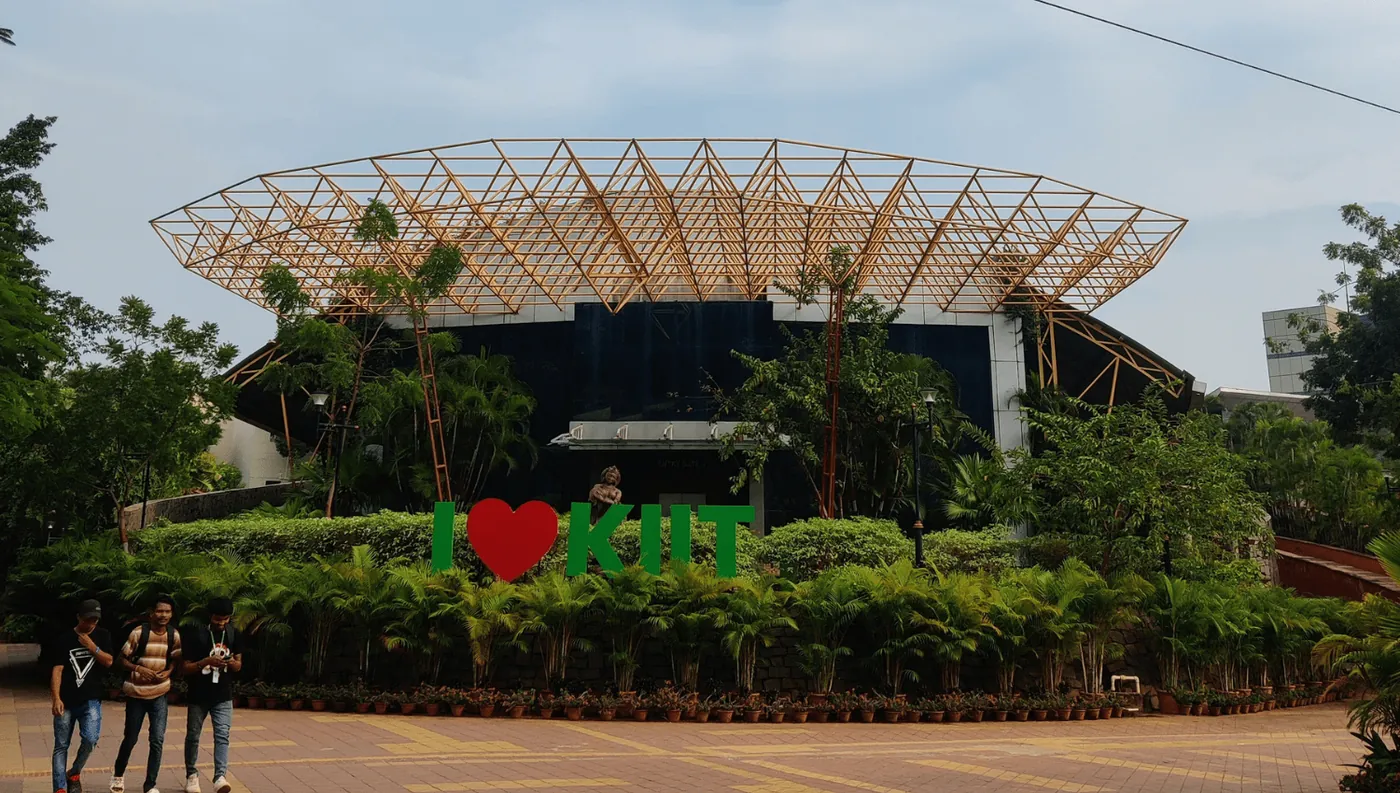
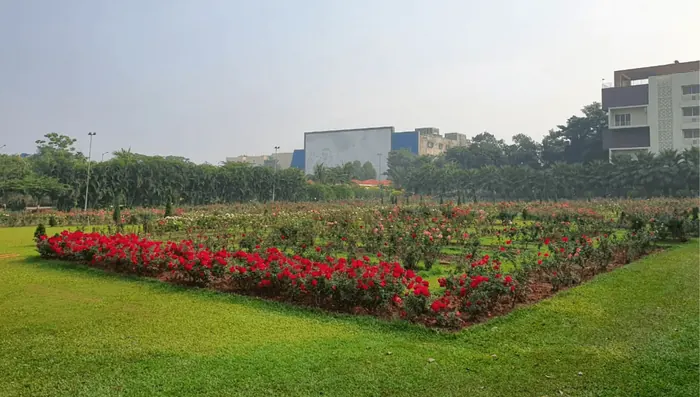
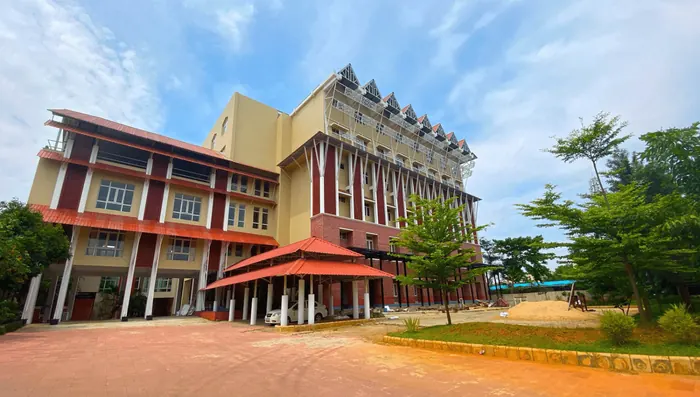
KIIT Campus Gallery
Photographs of the KIIT campus in Bhubaneswar. Select any image to view it full size.
Campus photographs courtesy of KIIT Deemed to be University (kiit.ac.in).
The region
Plenary Four treats Odisha not as an isolated case study, but as an important analytical site for examining broader transformations in India's cultural, economic and political spheres. This is why the region sits at the centre of the 51st Conference.
A long eastern seaboard whose fishing economies, cyclone exposure and shoreline change make coastal sociology unavoidable.
Forest landscapes that sustain livelihoods, customary rights and long-standing relationships between communities and land.
One of India's most diverse Indigenous populations, with a rich plurality of languages, livelihoods and community institutions.
Knowledge systems carried in practice, craft, cultivation and oral tradition rather than written in academic texts.
Temple architecture, classical and folk performance, textile and painting traditions that continue to shape everyday life.
Mining, industry and infrastructure reshaping land, labour and livelihoods — and the social questions that follow.
Continuity
Each All India Sociological Conference builds on the one before it. The 51st Conference takes up the intellectual thread of the 50th and turns it towards culture, region and the classroom.
“Mobilities and Inequalities: Shifting Contexts; Changing Paradigms”
Hosted by the Department of Sociology and Anthropology, Easwari School of Liberal Arts, SRM University-AP, Amaravati.
“Culture Region and Pedagogy: Exploring the Future of Indian Sociology”
Hosted by KIIT University, Bhubaneswar, Odisha.
Questions
The 51st All India Sociological Conference (51st AISC) is the annual national conference of the Indian Sociological Society (ISS). The first such conference was held in Dehradun in 1955, and it has met across the country ever since. The 51st edition is hosted by the Department of Sociology, School of Liberal Studies, Kalinga Institute of Industrial Technology, Deemed-to-be-University (KIIT Deemed to be University), Bhubaneswar, Odisha.
“Culture Region and Pedagogy: Exploring the Future of Indian Sociology.” The conference is organised around four core plenaries: Culture, Region and Indigeneity; Pedagogy, Profession and Disciplinary Futures; Indian Sociology in Retrospect: Old Roots and New Routes; and Sociology in/of Odisha: Understanding the Region.
At KIIT Deemed to be University in Bhubaneswar, the capital of Odisha, hosted by the Department of Sociology, School of Liberal Studies. The specific conference hall within the campus has not yet been announced.
From December 27 to 29, 2026. Delegates registered under “Registration with accommodation” may arrive from the evening of December 26, 2026.
The conference brings together sociologists, researchers, faculty members, students and scholars from India and abroad. To register for the conference, one has to be a member of the ISS. Membership of the ISS and the respective Research Committee is mandatory for paper presentations. A member can hold the membership of three RCs at the maximum, and an individual presenter is eligible to present two papers at the maximum in the conference.
Abstracts should be submitted from the ISS website insoso.org — log in to your ISS account and submit. The abstract must be between 200–250 words and follow the prescribed format. The last date of submission is on or before October 31, 2026. See the Abstract Submission page for the full criteria and format.
Registration fees depend on your category and when you register. Early Bird rates apply till 10 October 2026 — from ₹4500 for delegates and ₹3500 for research scholars/students without accommodation, and USD 300 / USD 150 for foreign delegates and students. Rates rise in the 11–31 October and 1–30 November windows, and again for spot registration. All rates are inclusive of 18% GST. See the full fee table.
Accommodation will be provided to only those delegates who have registered under the category “Registration with accommodation”, from December 26, 2026 evening to December 29, 2026. Those who require accommodation after December 29, 2026 should arrange it personally. Accommodation will be moderate and on a shared/dormitory basis inside the campus premises. For queries, contact iss.conf@kiit.ac.in.
Bhubaneswar is served by Biju Patnaik International Airport (BBI) and Bhubaneswar Railway Station (BBS), and lies on National Highway 16. Campus routing, distances and any conference transport arrangements will be confirmed closer to the conference.
The last date of withdrawal of registration is November 30, 2026. In case of cancellation before the last date of withdrawal, only 75% of the registration amount will be refunded.
Registration fee should be paid through the online portal for the 51st All India Sociological Conference through Internet banking/UPI/Credit or Debit card/IMPS/RTGS/NEFT. A Canara Bank Scan & Pay UPI QR code is also published on the Registration page. The official KIIT payment link will be added there when it is issued.
For queries regarding the AISC conference: iss.conf@kiit.ac.in. For queries regarding the ISS registration: societyinsoso@gmail.com. The respective RC Convenors should be contacted for any enquiry regarding abstract submission and acceptance — see the Research Committee contacts.
Join us in Bhubaneswar
Registration, the Call for Papers and abstract submission for 2026 will open in due course. Keep this page bookmarked for official announcements.
