

01
Ground theory in lived reality
To examine how local cultural expressions, regional specificities and everyday practice can shape the future of Indian sociology in an interconnected yet fragmented world.
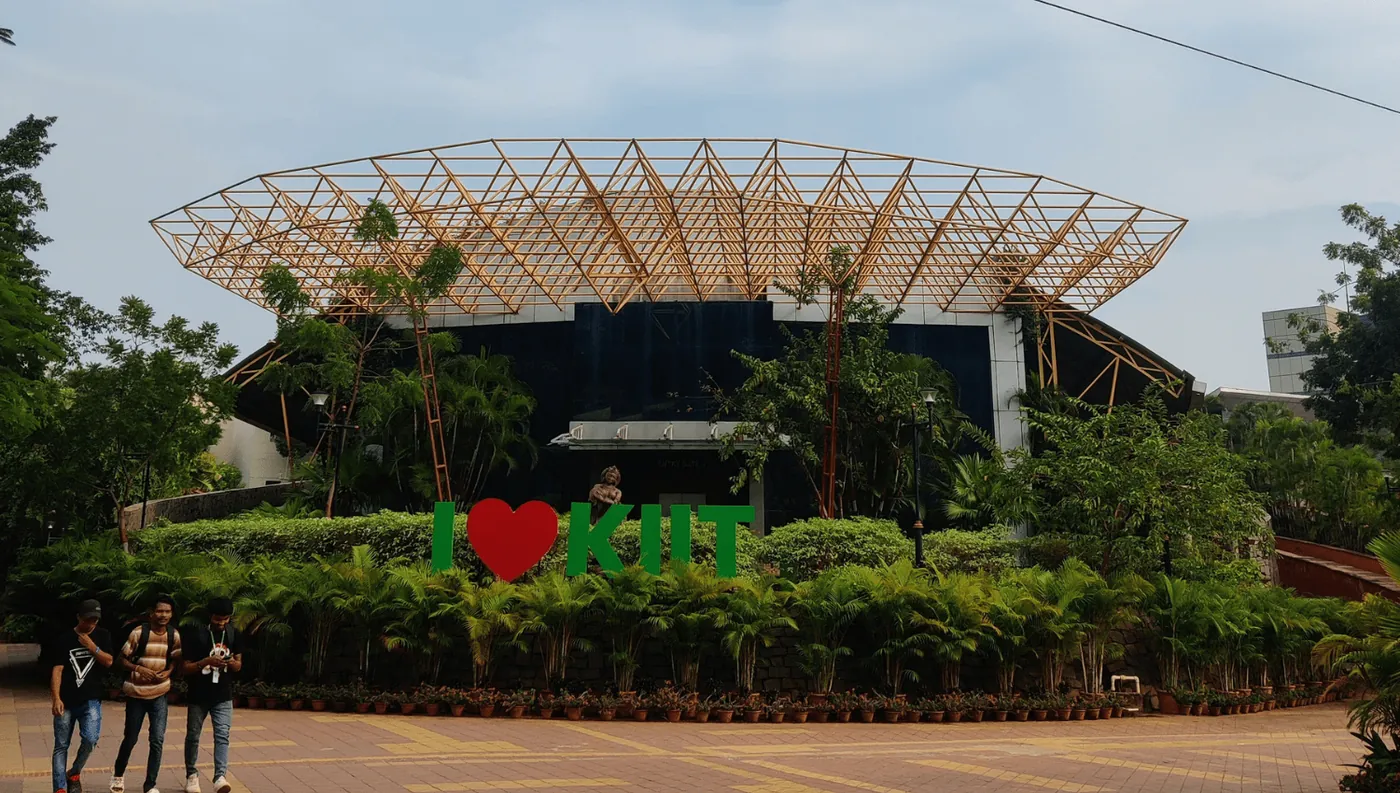
Culture, Region and Pedagogy: Exploring the Future of Indian Sociology — hosted by the Department of Sociology, School of Liberal Studies, KIIT Deemed to be University, Bhubaneswar, Odisha, 27–29 December 2026.
Invitation
It gives us immense pleasure to invite you to the 51st All India Sociological Conference (51st AISC) of the Indian Sociological Society (ISS). The conference will be hosted by the Department of Sociology, School of Liberal Studies, Kalinga Institute of Industrial Technology (KIIT) Deemed to be University, Bhubaneswar, Odisha from December 27 to 29, 2026. The theme of the conference is Culture, Region and Pedagogy: Exploring the Future of Indian Sociology. The conference will be attended by national and international delegates, including renowned sociologists, professors, researchers, and students. The collective expertise of the scholars would help the participants to engage and extend the discourses within sociology. This website provides you with all the required information to participate in the conference. We look forward to welcoming you to the 51st AISC at KIIT Deemed to be University in December 2026.
Introduction
We are living through a period of rapid and significant social transformation. Across the globe, the rise of new forms of populist politics and mobilisation, the growing demand for specialised professional skills, and the rise of digital platform economies have collectively reconfigured the fabric of everyday social reality.
In their influential work On Decoloniality (2018), Walter D. Mignolo and Catherine E. Walsh observe that we are witnessing a “pluriversality of social problems”. In simple terms, this means that complex socio-human challenges can no longer be conceptualised through a single, universal model. Rather, localised crises — whether a regional ecological change, local caste resentments or neighbourhood-level housing struggles — are conditioned by their own unique specific historical and social contexts while remaining deeply tied to worldwide economic and political shifts.
The world is not a uniform whole; it is a “pluriverse” made up of many interconnected worlds, each requiring empirically grounded sociological analysis.
The 51st All India Sociological Conference (2026) builds directly upon this intellectual heritage. It explores how local cultural expressions, regional specificities and classroom teaching practices can shape the future of Indian sociology in an interconnected yet fragmented world.
What the conference sets out to do
The objectives below follow directly from the conference concept note for the 51st AISC.
To examine how local cultural expressions, regional specificities and everyday practice can shape the future of Indian sociology in an interconnected yet fragmented world.
To confront the challenge to established ways of defining truth, validating evidence and determining whose knowledge is recognised as legitimate.
To return to the foundational debates of Indian sociology and chart new trajectories for research in an era where traditional disciplines increasingly overlap.
To assess how higher education spaces, teaching methodologies and pedagogical practices are being restructured under the NEP 2020 framework.
To strengthen the discipline's evidence-based and public orientation on climate change, changing forms of employment, technological transformation and emerging inequalities.
To demonstrate how localised regional experiences illuminate significant macro-level transformations across India, and how regional sociology contributes to broader theory.
Conference theme
Three intersecting pillars frame the 51st Conference. Together they ask a single question: what should Indian sociology become?
Indigenous knowledge systems, vernacular oral traditions and community-level cultural practices and values challenge cultural hegemonisation — the dominance of one culture or worldview over all others. The conference moves beyond simplistic definitions of “the native” to show how territory, local lifestyles and ethical values remain intimately connected.
The region is treated not as an isolated case study but as an analytical site. Radha Kamal Mukerjee of the Lucknow School argued that sociology must study the intimate links between regional geography, culture, values and social ecology — the relationship between human communities and their natural surroundings — to understand the complex realities that sustain social life.
India's National Education Policy (NEP) 2020 promotes multidisciplinary learning, the use of Indian and regional languages, and greater emphasis on practical and skill-oriented education. For sociology, these developments create an urgent mandate to connect theoretical inquiry with empirical research and public concerns.
Decolonising theory & reclaiming indigenous realities
At the heart of this gathering lies an urgent need to engage with what has been described as an epistemic crisis: a challenge to established ways of defining truth, validating evidence, and determining whose knowledge is recognised as legitimate.
For much of its institutional history, sociology in universities across the world has been strongly influenced by the works of Western theorists such as Marx, Weber and Durkheim, assuming their findings about European industrial societies applied universally across the globe.
Scholars such as Raewyn Connell, particularly through her formulation of “Southern Theory”, and Syed Farid Alatas have critically examined this epistemic imbalance and advocated the decolonisation of sociological knowledge. Their work calls for greater recognition of “Theory from the South”.
Indian sociology
Within India, the debate over the relationship between indigenous social realities and wider sociological frameworks has a long intellectual history.
In Sociology of Indian Culture, D. P. Mukerji argued for a sociology grounded in India's historical, cultural and distinctive cultural rhythms rather than one that simply reproduces European conceptual models.
Sociology of Indian CultureStrengthened the empirical orientation of Indian sociology by shifting the discipline away from the “Book View” — the historical practice of analysing Indian society solely through ancient Sanskrit texts — in favour of the empirical “Field View”. By immersing themselves in real villages through participant observation, sociologists could document social life as it was actually lived.
The empirical field viewDemonstrated that Indian inequality cannot be reduced to caste alone. Power, economic class and social status interact along multiple, often conflicting lines, making Indian society far more layered than classical theories suggested.
Honoured in Plenary ThreeLong before mainstream sociology fully recognised it, Dr. B. R. Ambedkar offered an indispensable critique of institutional power. Ambedkar showed that sociology must not merely observe social structures passively, but expose and challenge the lived cruelties of caste oppression.
Sociology as critiqueThematic focus of the 51st Conference
To understand the dynamic tension between abstract theory, context and everyday practice, the Conference is organised around four core plenaries.
This session will examine how indigenous knowledge systems, vernacular oral traditions, and community-level cultural practices and values challenge cultural hegemonisation — the dominance of one culture or worldview over all others. It moves beyond simplistic definitions of “the native” to show how territory, local lifestyles and ethical values remain intimately connected.
The panel will investigate how higher education spaces, teaching methodologies and pedagogical practices are being restructured under the NEP 2020 framework. It offers a clear-eyed assessment of both the opportunities and the risks involved in realigning traditional academic sociology with hands-on, market-driven demands, policy-oriented training, multidisciplinary education and skill development.
Central to this deliberation is a crucial epistemological question: how can sociology preserve its critical reflexivity and theoretical rigour while simultaneously equipping students for evolving, dynamic professional avenues and opportunities?
Honouring the intellectual legacies of Prof. André Béteille and Prof. T. K. Oommen, this plenary revisits foundational concepts like social stratification, democratic citizenship and social pluralism. It charts new trajectories for sociological research in an era where traditional disciplines increasingly overlap.
The plenary connects the conference's broader theoretical concerns with the specific social, cultural and lived realities of Odisha. By exploring the state's sensitive coastal and forest ecologies, rich Adivasi and tribal heritage, indigenous knowledge system and traditional culture alongside environmental changes, industrialisation, development and evolving cultural traditions, the session treats Odisha not as an isolated case study, but also as an important analytical site for examining broader transformations in India's cultural, economic and political spheres.
Ultimately, this panel investigates how localised regional experiences illuminate significant macro-level transformations across India, demonstrating how regional sociology offers crucial contributions to broader sociological theory and knowledge production, helping to chart new trajectories for the discipline.
Academic context
The emphasis on grounding sociological inquiry in local social realities faces several contemporary challenges, including those associated with changing approaches to higher education under India's National Education Policy (NEP) 2020.
The policy promotes multidisciplinary learning, the use of Indian and regional languages, and greater emphasis on practical and skill-oriented education. For sociology, these developments create an urgent mandate to connect theoretical inquiry with empirical research and public concerns. This orientation requires greater engagement with contemporary social issues through evidence-based and context-sensitive research.
Scholars such as Prof. T. K. Oommen and Prof. Partha N. Mukherji have emphasised, in different ways, that Indian sociology needs to maintain a dynamic equilibrium between locally grounded social realities and broader global sociological debates. This requires a balance between context-specific empirical inquiry and engagement with wider theoretical perspectives.
Sociology must study the intimate links between regional geography, culture, values and social ecology — the relationship between human communities and their natural surroundings. After Radha Kamal Mukerjee, Lucknow School
Understanding how environmental degradation disproportionately impacts resource-dependent rural and tribal populations.
Addressing the chronic economic and emotional insecurity experienced by workers trapped in unstable, low-paying gig work, and examining the everyday survival strategies of city dwellers in unauthorised colonies or informal settlements where basic infrastructure is scarce.
Analysing how automated technologies, data tracking and algorithmic decision-making influence welfare distribution and civil liberties.
Sub-themes
Few of the sub-themes (but not limited to) to be deliberated upon through the Research Committees of the Indian Sociological Society, providing an opportunity to connect specialized areas of sociological research with wider theoretical and empirical concerns are as follows:
Memorial Lectures
Three Memorial Lectures in the names of Professor M N Srinivas, Professor Radhakamal Mukherjee and Professor Yogendra Singh will be organised during the 51st All India Sociological Conference.
Paper presentation and membership of ISS
Research papers are invited in English and Hindi to be presented during technical sessions of the Research Committees (RCs) and the Ad-Hoc Research Committees of the Indian Sociological Society. The papers are to be prepared in consonance with the main theme of the conference.
Membership of the ISS & the respective RC is mandatory for paper presentations. Membership can be obtained through the ISS web portal https://insoso.org/membership. Only members of the Indian Sociological Society are eligible for RC Membership.
Seven decades
Looking back at the historical record of the All India Sociological Conferences over the past five decades reveals how Indian sociology has continuously adapted to explain changing realities.
The First All India Sociological Conference, held in Dehradun in 1955 with the theme “Social Change”, marked an early effort to examine the structural and institutional dimensions of Indian society. During the initial decades, sociological scholarship largely focused on social stratification, caste, class, modernisation, social institutions, and the processes associated with nation-building and democratic consolidation.
From the late twentieth century onwards, the scope of sociological inquiry expanded to include social movements, agrarian relations, inequality, resistance, and emerging forms of identity-based mobilisation. Conferences held in Chandigarh (1976), Surat (1984) and Mangalore (1993) reflected growing scholarly engagement with the experiences of marginalised communities and changing patterns of collective action.
In the twenty-first century, the AISC increasingly addressed the implications of globalisation, civil society, technological change and new forms of social exclusion. Conferences held in Kanpur (2002), Lucknow (2017) and Amaravati (2025) demonstrate the continued expansion of sociological inquiry in response to emerging social transformations.
Theme: “Social Change”.
Social movements, agrarian relations, inequality, resistance and identity-based mobilisation.
Globalisation, civil society, technological change and new forms of social exclusion.
“Mobilities and Inequalities: Shifting Contexts; Changing Paradigms”, hosted by SRM University-AP.
“Culture, Region and Pedagogy: Exploring the Future of Indian Sociology”, hosted by KIIT University.
Participate
The Call for Papers, abstract submission guidelines and registration for 2026 will be published on this website.